
Categories
Neuro Surgeon Spine Specialist

Orthopedic Spine Surgeon vs Neurosurgeon: Key Differences

When back pain strikes or a spinal injury disrupts your life, choosing the right specialist matters. An orthopedic spine surgeon in San Antonio, TX, focuses on musculoskeletal spine conditions, offering targeted treatments for herniated discs and fractures. Meanwhile, a neurosurgeon addresses nerve-related issues with precision. At the Brain and Spine Institute, San Antonio, Texas, our team of spine specialists, San Antonio, TX, combines both expertise to deliver personalized care. Understanding these differences helps you select the best doctor for your needs—let’s break it down.

What Is an Orthopedic Spine Surgeon?

Orthopedic spine surgeons are medical doctors who are first trained in general orthopedics, then specialize in the spine. They treat the spine as part of the body’s skeletal system, emphasizing bones, joints, ligaments, and muscles.

Training and Expertise

Their path starts with four years of medical school, followed by a five-year orthopedic residency. Many complete a one- to two-year spine fellowship. This hands-on training equips them to handle deformities like scoliosis, spinal fractures from trauma, and degenerative issues such as spinal stenosis.

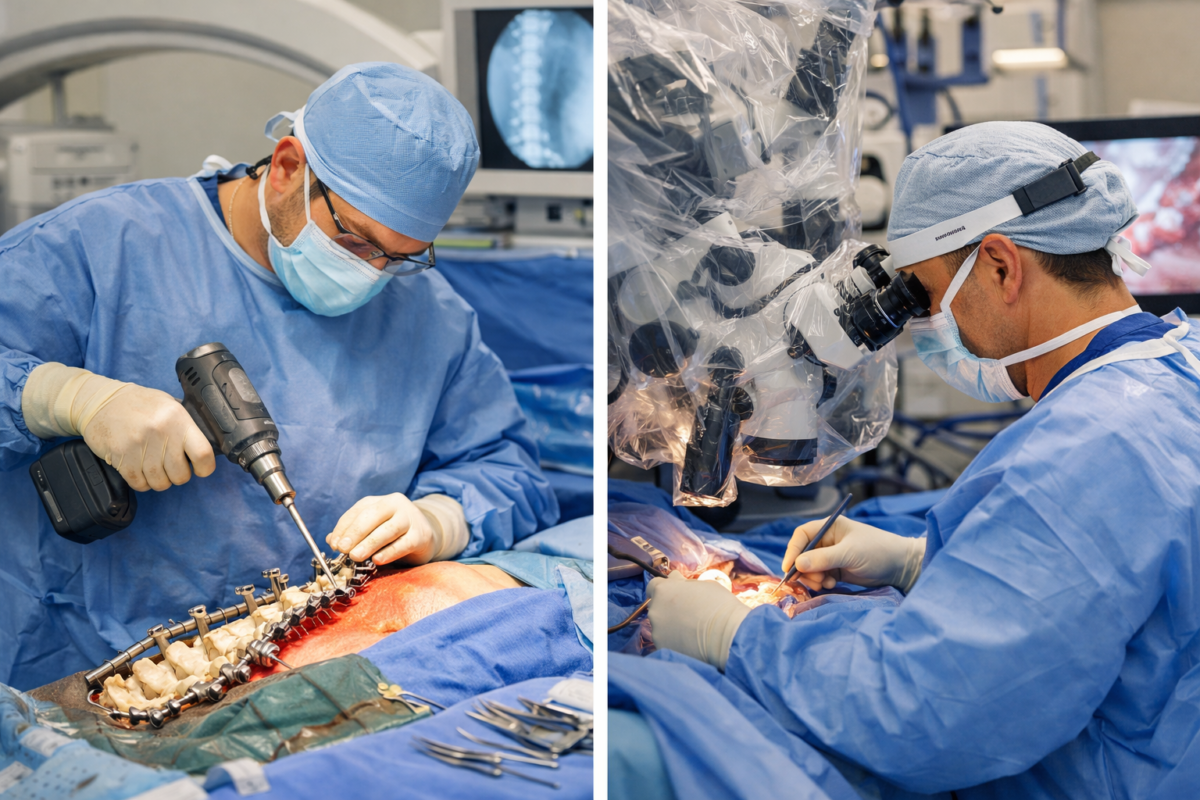
Orthopedic spine surgeons excel at procedures that mechanically stabilize the spine. For instance, they perform spinal fusions using rods, screws, and bone grafts to realign vertebrae. Minimally invasive techniques, such as endoscopic discectomies, are also part of their toolkit, reducing recovery time.

Common Conditions Treated

  • Degenerative disc disease
  • Herniated discs causing radiculopathy
  • Spinal instability or spondylolisthesis
  • Fractures from osteoporosis or accidents

Patients often see orthopedic spine surgeons for sports injuries or work-related strains. Data from the American Academy of Orthopaedic Surgeons shows they handle over 70% of spinal fusion surgeries annually, highlighting their mechanical prowess.

What Is a Neurosurgeon?

Neurosurgeons are specialists in the nervous system, including the brain and spinal cord. They approach the spine through a neurologic lens, prioritizing nerve protection and decompression.

Training and Expertise

After medical school, neurosurgeons undergo a seven-year residency in neurological surgery. Spine-focused fellowships add one to two years. This rigorous path builds skills in navigating delicate neural structures.

Neurosurgeons shine in surgeries requiring nerve manipulation, such as tumor resections or decompressions for pinched nerves. They use advanced tools, such as microscopes and intraoperative neuromonitoring, to protect the spinal cord during procedures.

Common Conditions Treated

  • Spinal tumors (benign or malignant)
  • Cauda equina syndrome (emergency nerve compression)
  • Chiari malformations
  • Severe nerve entrapments like cervical myelopathy

According to the American Association of Neurological Surgeons, neurosurgeons perform most intradural surgeries—those inside the spinal canal involving the dura mater.

Head-to-Head Comparison: Orthopedic Spine Surgeon vs Neurosurgeon

Both specialists overlap in treating many spine issues, but their areas of focus diverge. Here’s a clear breakdown:

Aspect Orthopedic Spine Surgeon Neurosurgeon
Primary Focus Bones, joints, ligaments, muscles Nerves, spinal cord, brain-spine interface
Training Length 5-year ortho residency + 1-2 year fellowship 7-year neurosurgery residency + 1-2 year fellowship
Signature Procedures Spinal fusion, laminectomy, disc replacement Microdiscectomy, tumor removal, nerve decompression
Best For Deformities, fractures, instability Tumors, infections, complex neural issues
Minimally Invasive High expertise (e.g., XLIF, TLIF approaches) Strong in endoscopic neural work
Outcomes Excellent for mechanical stability (90%+ success in fusions) Superior for nerve preservation (low reoperation rates)

Studies, such as those in Spine Journal, show no significant differences in outcomes for routine disc herniations—both achieve 85-95% success. The choice depends on the nature of your condition. 

When to Choose an Orthopedic Spine Surgeon

Opt for an orthopedic spine surgeon if your issue stems from structural problems. Imagine a car accident fracturing your lumbar vertebrae: their expertise in hardware stabilization prevents collapse.

They’re ideal for chronic wear-and-tear cases. An orthopedic spine surgeon in San Antonio, TX, might recommend physical therapy first, then arthroscopic surgery if needed. At Brain and Spine Institute, San Antonio, Texas, our orthopedic experts use robotic-assisted surgery for precision, minimizing tissue damage.

Real-world example: A 45-year-old construction worker with spondylolisthesis (slipped vertebra) benefits from fusion surgery, restoring load-bearing capacity.

When to Choose a Neurosurgeon

Turn to a neurosurgeon for nerve-centric problems. If a tumor presses on your spinal cord, causing weakness or incontinence, their neural navigation skills are crucial.

They’re the go-to for emergencies like epidural abscesses from infections. A neurosurgeon can rapidly decompress nerves, preserving function. In San Antonio, spine specialists at our institute handle these with state-of-the-art imaging.

Case in point: A patient with cervical stenosis and myelopathy (spinal cord compression) undergoes an anterior cervical discectomy by a neurosurgeon, regaining hand dexterity.

Overlaps and Team Approaches

Modern spine care blurs lines—many conditions suit either specialist. For sciatica from a herniated disc, both perform discectomies effectively. Dual-trained surgeons (ortho-neuro) exist, but most practices favor collaboration.

At the Brain and Spine Institute in San Antonio, Texas, we integrate both. Call (210) 625-4733 for a multidisciplinary evaluation—your spine specialist in San Antonio, TX, tailors plans using MRI, CT, and EMG diagnostics.

Advancements in Spine Surgery

Technology levels the field. Both use:

  • Robotics: da Vinci systems for 3D precision.
  • Minimally Invasive Surgery (MIS): Smaller incisions, faster recovery (outpatient in 60% of cases).
  • Regenerative Therapies: Stem cells and PRP injections to heal discs without surgery.

Making the Right Choice for Your Spine Health

Don’t self-diagnose—symptoms like radiating pain, numbness, or bowel issues warrant prompt evaluation. Factors include:

  1. Condition specifics (bone vs. nerve).
  2. Surgeon experience (look for 500+ spine cases).
  3. Facility tech (e.g., navigation systems).
  4. Patient reviews and board certifications.

In San Antonio, seek an orthopedic spine surgeon, San Antonio, TX, or a neurosurgeon via trusted institutes. Prioritize conservative care first: meds, injections, PT resolve 80% of issues.

Ready for relief? Contact the Brain and Spine Institute in San Antonio, Texas, at (210) 625-4733. Our spine specialists in San Antonio, TX, guide you from diagnosis to recovery.

Frequently Asked Questions (FAQs)

Q: Can an orthopedic spine surgeon treat brain issues?

A: No, they focus on the spine. Brain tumors require neurosurgeons. 

Q: Is one better than the other for scoliosis surgery?

A: Orthopedic spine surgeons often lead due to their deformity expertise, but teams collaborate. 

Q: How do I find a top orthopedic spine surgeon in San Antonio, TX?

A: Check board certification, patient outcomes, and facilities like the Brain and Spine Institute in San Antonio, Texas. Call (210) 625-4733 for consultations. 

Q: What’s recovery like after spine surgery?

A: Varies—MIS: 2-6 weeks; fusions: 3-6 months. PT accelerates it. 

Q: Do spine specialists in San Antonio, TX accept insurance?

A: Most do, including Medicare. Verify with providers like ours. 

Q: Orthopedic spine surgeon vs neurosurgeon—which for herniated discs?

A: Both excel; choose based on the surgeon’s case volume and your symptoms.

Categories
Neuro Surgeon Spine Specialist

Is Spine Surgery the Only Option for Severe Back Pain?

Severe back pain can be overwhelming, and many patients start searching online for an Orthopedic spine surgeon in San Antonio, TX when symptoms worsen and begin affecting their daily routine. While spine surgery is sometimes necessary, it is not always the only option—and for many people, it is not the first step in treatment. At Brain and Spine Institute, San Antonio, Texas, we prioritize accurate diagnosis, conservative care, and personalized treatment plans to help patients regain mobility and comfort with the least invasive approach possible.

Back pain is one of the most common reasons patients seek medical attention. Whether it comes from a disc problem, spinal stenosis, nerve compression, arthritis, an injury, or posture issues, understanding your treatment options is key to making the right decision for your health.

Understanding the Real Cause of Severe Back Pain

Back pain is a complex condition influenced by multiple factors. Before recommending surgery, our specialists use advanced imaging, neurological evaluations, and physical examinations to locate the exact source of pain. This ensures that the treatment plan is customized according to your needs—not based on assumptions.

Common causes include:

  • Herniated or bulging discs
  • Degenerative disc disease
  • Spinal stenosis
  • Sciatica or nerve compression
  • Vertebral fractures
  • Scoliosis or spinal deformities
  • Repetitive strain injuries
  • Sport- or work-related injuries

Understanding the source of pain allows us to determine whether non-surgical treatments may be more beneficial and effective.

Is Spine Surgery Always Necessary?

The simple answer is: No. Most patients recover without surgery.

A board-certified specialist—such as an Orthopedic spine surgeon near me, San Antonio, TX—will always try conservative care first unless the condition is severe, progressive, or involves neurological deficits.

You may not need spine surgery if:

  • Your pain improves with physical therapy
  • Medications or injections help reduce inflammation
  • The nerve compression is mild
  • Your mobility is stable
  • You do not have symptoms like bowel or bladder dysfunction
  • Your pain is episodic rather than constant

At the Brain and Spine Institute in San Antonio, Texas, surgery is recommended only when it becomes medically necessary and when non-surgical treatments have failed.

Effective Non-Surgical Treatments for Severe Back Pain

One of our primary goals is to help patients avoid surgery whenever possible. Here are some of the most effective treatment options offered at our clinic: 

  1. Physical Therapy & Rehabilitation

Physical therapy can dramatically improve strength, posture, flexibility, and spinal alignment. Customized exercise programs often relieve pain by reducing pressure on the nerves and supporting the spine through proper muscle engagement. 

  1. Pain Management & Medication

Medications such as anti-inflammatories, nerve pain medications, or muscle relaxants can help control symptoms during flare-ups. These support your healing process while reducing discomfort. 

  1. Epidural Steroid Injections

Steroid injections are an excellent option for patients experiencing radiating leg pain or nerve inflammation. These injections:

  • Reduce swelling
  • Provide long-lasting relief
  • Help patients avoid surgery
  • Allow you to continue physical therapy more comfortably 
  1. Lifestyle Modifications

Small changes can provide big results:

  • Posture correction
  • Ergonomic adjustments
  • Weight management
  • Strengthening exercises
  • Avoiding heavy lifting

These proactive steps help prevent your condition from worsening. 

  1. Chiropractic Care & Manual Therapy

Many patients find relief through chiropractic adjustments, massage therapy, or spinal manipulation when performed under medical supervision. 

When Is Spine Surgery the Best Choice?

There are certain conditions where surgery becomes the most effective—and sometimes the only—solution to prevent permanent nerve damage and restore mobility.

You may need spine surgery if you experience: 

Severe nerve compression

Symptoms may include numbness, tingling, weakness, or Loss of sensation in the legs. 

Loss of bladder or bowel control

This is a medical emergency and requires immediate surgical intervention. 

Spinal instability or deformities

Conditions like scoliosis or spondylolisthesis may require stabilization. 

Persistent pain despite months of treatment

If non-surgical treatments fail, surgery may be recommended. 

Herniated discs that do not respond to conservative therapy

Spinal fractures

At Brain and Spine Institute, San Antonio, Texas, we perform minimally invasive surgeries whenever possible, helping patients recover faster with less pain and smaller incisions.

Types of Spine Surgeries We Offer

  1. Minimally Invasive Spine Surgery (MISS)

This technique uses tiny incisions and advanced technology. Benefits include:

  • Faster recovery
  • Less blood loss
  • Minimal scarring
  • Reduced hospital stay 
  1. Microdiscectomy

Ideal for patients with herniated discs compressing spinal nerves. 

  1. Laminectomy

Performed for spinal stenosis to relieve pressure on nerves. 

  1. Spinal Fusion

Helps stabilize the spine and reduce pain from motion in damaged areas. 

  1. Artificial Disc Replacement

Preserves movement and flexibility while resolving disc problems.

Each surgery is planned with precision and tailored to the patient’s condition, health, and desired outcome. 

Why Choose Brain and Spine Institute, San Antonio, Texas?

Patients trust us because we combine advanced medical expertise with compassionate care. Our team prioritizes:

Accurate Diagnosis

Every treatment plan begins with a thorough evaluation. 

Personalized Treatment Plans

No two patients are the same—your plan should not be either. 

Minimally Invasive Options First

We help avoid surgery whenever possible. 

State-of-the-Art Technology

Our clinic uses the latest imaging, equipment, and surgical systems. 

Experienced Orthopedic Spine Specialists

Our surgeons bring years of experience and a strong track record of successful outcomes. 

A Supportive, Patient-Centered Approach

We guide you from diagnosis to recovery. 

How to Know If You Need to See a Spine Specialist?

Book an appointment if you experience:

  • Persistent back pain lasting more than 4 weeks
  • Radiation of pain into the legs (sciatica)
  • Numbness, tingling, or weakness
  • Difficulty walking or standing
  • Recent trauma or injury
  • Sudden, unexplained pain
  • Pain that disrupts sleep or daily activities

Seeing a spine specialist early prevents complications and improves long-term outcomes.

Conclusion: Surgery Is Not Your Only Option

While severe back pain can be alarming, spine surgery is rarely the first step—and often, patients recover with conservative care and lifestyle adjustments. However, when necessary, surgical treatment can relieve pain, restore function, and dramatically improve quality of life.

If you’re experiencing ongoing back pain and wondering about your options, the Brain and Spine Institute in San Antonio, Texas, is here to help you get the right diagnosis and the right treatment.

Contact Us

Brand Name: Brain and Spine Institute, San Antonio, Texas

Phone: (210) 625-4733

Location: 12709 Toepperwein Rd, Suite 101, Live Oak, TX 78233

FAQs

  1. Is spine surgery safe?

Yes. Modern spine surgery—especially minimally invasive techniques—is highly safe when performed by experienced specialists. 

  1. How do I know if I need surgery?

If conservative treatments fail or if you develop neurological symptoms, surgery may be needed. Your surgeon will guide you based on imaging and medical evaluation. 

  1. Can severe back pain improve without surgery?

Absolutely. Many patients respond well to therapy, medications, and injections. 

  1. How long is the recovery after spine surgery?

Recovery depends on the type of surgery. Minimally invasive procedures often have faster healing times. 

  1. When should I visit an Orthopedic spine surgeon near me in San Antonio, TX?

If your pain is severe, long-lasting, or accompanied by numbness or weakness, schedule an evaluation immediately.